How Hot Food Vending Machines Make Money: A Practical Operator’s Guide
Learn how hot food vending machines generate revenue through location choice, menu planning, pricing, restocking, food safety, low labor cost and 24/7 operation.
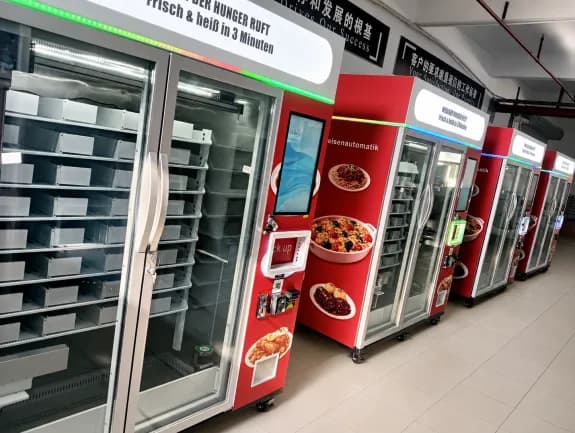
A hot food vending machine can be a useful business tool when it is planned around real customer demand. The machine itself does not automatically guarantee profit. Revenue depends on the location, food type, pricing, restocking plan, food safety management, electricity cost, rent and how well the operator controls waste.
The best way to understand this business is to look at how the machine creates income and where the main costs come from.
1Start with the right location
Hot food vending machines work best where people need quick meals but do not always have easy access to a restaurant. Good locations often include offices, factories, universities, hospitals, hotels, transport stations, gyms, night-shift workplaces and residential communities.
The key question is not only “Is there traffic?” The better question is: “Are people hungry here, and do they need food fast?”
A machine placed in a busy area with no meal demand may not sell well. A machine placed in a factory during lunch break or near a hospital at night may perform better because the food need is clear.
Before choosing a location, operators should check:
How many people pass the area daily?
When do they need meals?
Are restaurants nearby open at that time?
What price range do customers accept?
Is the location suitable for restocking and cleaning?
Can the machine run safely with enough space, power and ventilation?
2Make money from convenience, not only from food
Customers buy from a hot food vending machine because it saves time. They may not want to wait in line, use a delivery app, leave the building or search for food late at night.
This convenience creates business value. The machine can sell during lunch breaks, evening hours, weekends and late-night shifts. It can also serve small but steady demand outside normal restaurant hours.
For operators, the machine can become a 24/7 meal point with lower labor involvement. It does not need a cashier for every order, but it still needs good planning, restocking and maintenance.
3Choose food products with stable demand
The menu should match the location. A university may sell rice bowls, noodles, burgers, pasta, sandwiches and snacks. A factory may need filling meals at reasonable prices. A hospital may need lighter meals, soups or ready-to-heat lunch boxes. A hotel may need late-night options.
Good vending products usually have these features:
Easy to package
Stable under refrigerated or frozen storage
Easy to heat evenly
Clear portion size
Good margin
Low damage rate during dispensing
Customers understand the product quickly
It is better to start with a focused menu instead of too many choices. After sales data becomes clear, the operator can adjust products based on what sells fastest.
4Understand the profit formula
A simple way to estimate profit is:
Sales revenue - food cost - location rent - electricity - payment fees - restocking labor - maintenance - food waste = operating profit
For example, if the machine sells many meals but food waste is high, profit may still be weak. If rent is too expensive, even good sales may not be enough. If the menu price is too low, the operator may have volume but not enough margin.
That is why operators should not only look at daily sales. They should also track:
Gross margin per meal
Best-selling products
Slow-moving products
Peak sales hours
Average order value
Restocking frequency
Expired or unsold food rate
Electricity cost
Machine downtime
The machine becomes more profitable when sales are stable and waste is controlled.
5Use pricing carefully
Hot food vending is not always about selling the cheapest meal. Customers may pay more when the food is convenient, hot, clean and available at the right time.
A practical pricing strategy can include:
Entry-level meals for daily buyers
Mid-range meals for lunch and dinner
Premium meals for locations with higher spending power
Combo options with drinks or snacks
The goal is to match local customer expectations. If the price is too high, people may not repeat purchase. If the price is too low, the operator may not cover food cost, rent and electricity.
6Control food safety and temperature
Food safety is one of the most important parts of hot food vending. Depending on the product, the machine may need refrigerated, frozen or hot-holding storage. The heating system should bring the food to the right serving condition, and the machine should prevent unsafe products from being sold if temperature control fails.
Operators should follow local food safety rules and set a clear process for restocking, shelf life, cleaning and expired food removal.
Important points include:
Correct storage temperature
Clear product shelf life
Reliable heating process
Clean pickup area
Food-grade packaging
Temperature monitoring
Regular cleaning schedule
Expired food management
A hot food vending business should be built on trust. Customers need to feel that the food is safe and fresh enough to buy again.
7Reduce labor, but do not ignore operations
A hot food vending machine can reduce labor compared with a small food counter, but it is not a “set it and forget it” business. Someone still needs to restock food, clean the machine, check sales data, handle alerts and maintain the payment system.
The advantage is that one operator can manage multiple machines more efficiently than staffing multiple small food points. With remote management, operators can check inventory, sales and machine status before visiting the location.
This helps reduce unnecessary trips and improve restocking accuracy.
8Improve repeat purchase
One-time sales are useful, but repeat customers are what make the business stronger. To encourage repeat purchase, the food should be consistent, the machine should be easy to use and the product mix should change when needed.
Operators can improve repeat sales by:
Keeping popular meals in stock
Changing seasonal or weekly menu items
Offering clear product photos and prices
Using simple payment steps
Keeping pickup fast and smooth
Avoiding frequent machine downtime
Making the machine look clean and reliable
When customers trust the machine, they are more likely to use it as a regular meal option.
Conclusion
A hot food vending machine makes money when it solves a real meal problem in the right location. The strongest opportunities are usually places where people need quick hot meals, but restaurants are inconvenient, closed or too far away.
Profit depends on more than the machine price. Operators should calculate food cost, selling price, rent, electricity, restocking, waste and maintenance. They should also choose food products that are easy to store, heat, dispense and sell repeatedly.
Used well, a hot food vending machine can become a small self-service food point that operates throughout the day, reduces labor pressure and creates steady revenue from everyday meal demand.